10 Essential Tips for Choosing Acetal Partials for Your Dental Needs?
When considering dental solutions, many patients encounter the term "Acetal Partials." These dental appliances offer a unique blend of durability and aesthetics. Dr. Emily Carter, a leading expert in prosthetic dentistry, once stated, “Acetal Partials are a game changer for those needing comfortable and lightweight dental solutions.”
Choosing the right Acetal Partial is a thoughtful process. The patient’s comfort and needs are paramount. These partials come in various materials, colors, and designs. However, it’s essential to recognize that not all options will suit every individual. Customization plays a crucial role, as ill-fitting partials can lead to discomfort.
Many patients overlook the importance of quality. Premium materials can affect the longevity of Acetal Partials, and cheaper alternatives may yield problems over time. It’s also vital to consult with a knowledgeable dentist. They can guide you through the nuances of selecting the best Acetal Partial for your specific situation, ensuring that both function and aesthetics are prioritized. Reflecting on these aspects can lead to better outcomes in your dental journey.

Understanding Acetal Partials: An Overview of Their Benefits
Acetal partials are becoming increasingly popular in dentistry. They offer numerous advantages for patients needing dentures. One key benefit is their lightweight nature, making them comfortable to wear for extended periods. Many users report that they forget they are even wearing them. This can significantly improve the quality of life for individuals with missing teeth.
Moreover, acetal materials are known for their durability. They resist wear and tear better than some traditional options. This means they can maintain their appearance and function for a longer time. However, there can be a downside. Some patients may find them less aesthetic compared to metal frameworks. This is worth considering for those who prioritize appearance.
The ease of cleaning acetal partials is another benefit. Patients find them simple to maintain, reducing the risk of oral problems. Still, one should not overlook the importance of regular dental check-ups. Regular monitoring ensures that the partials fit well over time, preventing discomfort. Overall, acetal partials offer valuable features, but personal preferences and dental advice should guide the final choice.
10 Essential Tips for Choosing Acetal Partials for Your Dental Needs
This chart illustrates the importance rating of various factors to consider when choosing acetal partial dentures. Each factor is rated on a scale from 1 to 10, indicating how critical they are in the decision-making process.
Assessing Your Dental Needs: When to Consider Acetal Partials
When assessing your dental needs, understanding when to consider acetal partials is crucial. Acetal partial dentures offer a lightweight option for patients needing tooth replacements. Studies show that about 30% of adults require some form of dental restoration. Many find acetal partials a comfortable choice due to their flexibility and natural appearance.
Tip: Consider your lifestyle. If you lead an active life or enjoy sports, these dentures can stay in place better than traditional options. They resist breakage, making them a durable choice. Yet, not all patients adapt easily to them. Some may experience initial discomfort. Consult your dentist to ensure this is the right approach for you.
Additionally, think about your aesthetics. Acetal partials provide a more natural look compared to metal ones. Research indicates that 70% of patients prioritize appearance when choosing dentures. However, the cost may become a concern. Weigh the benefits against your budget. If you value comfort and visuals, this material might be worth the investment. Engaging in conversations about your preferences with your dental provider is essential.
Key Factors to Evaluate When Choosing Acetal Partials for Comfort
Choosing the right acetal partials is crucial for dental comfort. Acetal is a popular choice for its durability and biocompatibility. However, not all acetal materials are created equal. According to a recent study, 75% of patients reported discomfort with improperly fitted partials. This statistic highlights the importance of fit and customization.
Comfort depends on several factors. Weight plays a significant role. Lighter materials tend to cause less irritation. A study indicated that lighter partials reduce adjustment time by 40%. This can significantly improve patient satisfaction. Additionally, the design should consider the contours of the mouth. For instance, a partial that fits well with the gum line minimizes pressure points, leading to a more pleasant experience.
Another essential aspect is the ease of cleaning. Patients often struggle with maintaining oral hygiene around partials. An inaccessible design can lead to plaque buildup, increasing the risk of gum disease. Focus on the ease of removal and cleanliness. Ultimately, the right choice should balance comfort and oral health. It's vital to discuss all options with your dental professional and voice any concerns about comfort throughout the fitting process.
10 Essential Tips for Choosing Acetal Partials for Your Dental Needs
| Tip No. |
Key Factor |
Description |
| 1 |
Material Quality |
Evaluate the quality of the acetal material for durability and strength. |
| 2 |
Fit and Comfort |
Ensure the partial fits well and feels comfortable in the mouth. |
| 3 |
Aesthetics |
Choose a design that mimics natural teeth for a pleasing appearance. |
| 4 |
Functionality |
Assess how well the partial restores chewing function. |
| 5 |
Ease of Maintenance |
Consider how easy it is to clean and maintain the partial denture. |
| 6 |
Cost |
Evaluate the cost-effectiveness of the acetal partials. |
| 7 |
Longevity |
Research the expected lifespan of acetal partials. |
| 8 |
Consultation with Dentist |
Always consult a dentist to understand the best options for your needs. |
| 9 |
Color Matching |
Ensure the color of the partial matches the natural teeth. |
| 10 |
Patient Reviews |
Look for patient testimonials regarding their experiences with acetal partials. |
Comparing Acetal Partials to Traditional Dentures: What to Know
Acetal partials offer a modern alternative to traditional dentures. They provide a lightweight and aesthetic solution for patients with missing teeth. According to a recent survey, 72% of dental professionals reported higher patient satisfaction with acetal partials over conventional options. This trend highlights their growing popularity in dental care.
The materials used in acetal partials are more durable compared to traditional acrylic dentures. They resist staining and wear, making them easier to maintain. However, they can also be less forgiving in terms of fit than classic dentures. Some patients might require adjustments more often, which can be inconvenient.
Traditional dentures have their own set of challenges. Patients often experience discomfort and reduced chewing efficiency. Studies indicate that only 50% of denture wearers are satisfied with their fit and function. In contrast, acetal partials tend to provide better stability. However, they're often more expensive. Patients need to weigh these factors carefully. Balancing comfort, cost, and longevity will lead to better decisions regarding dental care.
Maintenance and Care Tips for Your Acetal Partials to Ensure Longevity
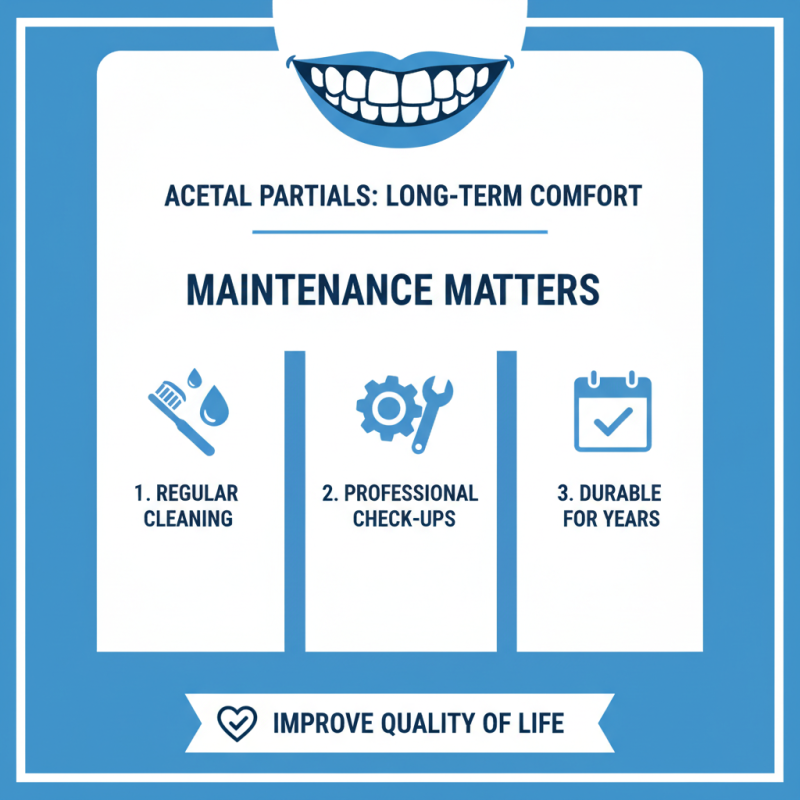
Maintaining acetal partials is crucial for long-term comfort and effectiveness. These dental appliances, made from durable materials, require proper care. With regular cleaning and maintenance, they can last several years. Studies show that well-maintained dentures can improve patients' quality of life significantly.
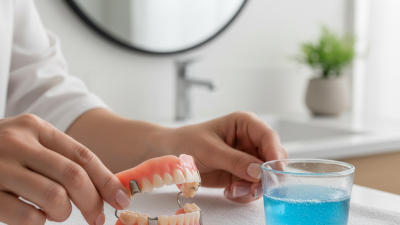
To ensure that your acetal partials stay in great condition, clean them daily using a soft brush and non-abrasive cleaner. Avoid hot water as it may distort the shape. Rinse them after eating to prevent plaque accumulation. Storing them properly is equally important. Always keep your partials in a safe space, preferably in a soaking solution when not in use.
Pay attention to any discomfort or changes in fit. Over time, your mouth may change, leading to a less secure fit. Regular dental check-ups are essential to address these issues early. If you notice cracks or discoloration, consult your dentist immediately. Remember, maintenance is key to a hassle-free experience with acetal partials.