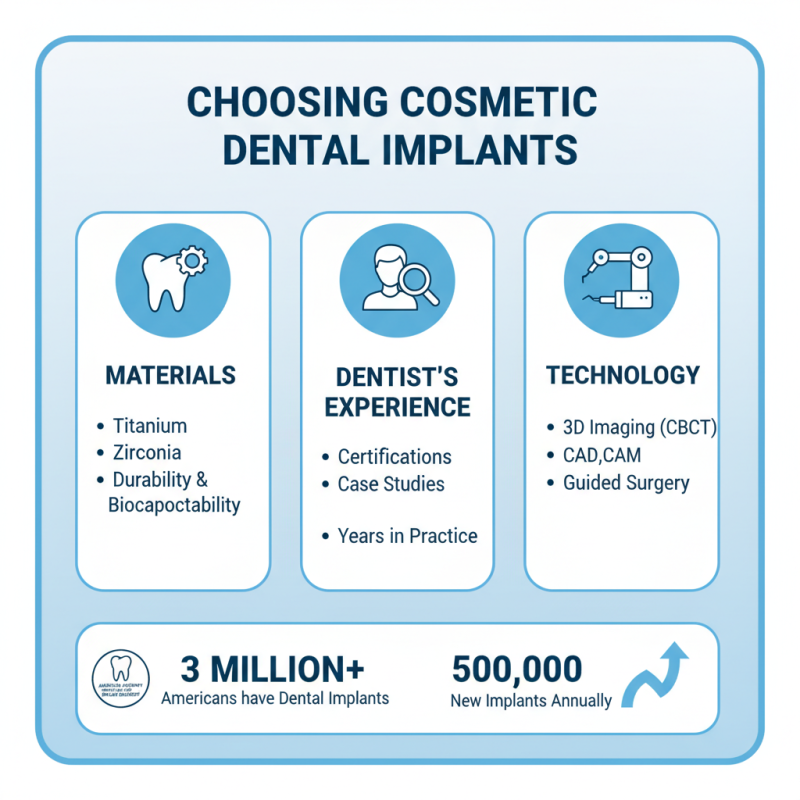
Choosing the best cosmetic dental implants is crucial for many individuals seeking a confident smile. Statistics show that around 3 million Americans have dental implants, and this number grows by 500,000 each year. It highlights the increasing demand for cosmetic solutions. According to Dr. Sarah Thompson, a leading expert in cosmetic dentistry, “Selecting the right implants can greatly impact long-term satisfaction and dental health.”
The market for cosmetic dental implants is evolving rapidly. Advances in technology and materials enhance durability and aesthetics. However, not all implants are created equal. Patients often face challenges in understanding which options best suit their needs. Comprehensive research and informed decisions are key. As Dr. Thompson notes, “A thorough consultation can uncover the best fit for individual situations.”
While innovative options are available, there are also potential pitfalls. Not every provider offers the same level of expertise, which can lead to dissatisfaction. Patients must navigate this landscape carefully. Being proactive about questions and assessments can lead to better outcomes. Evaluating both the implants and the providers is essential for lasting results in cosmetic dental implants.
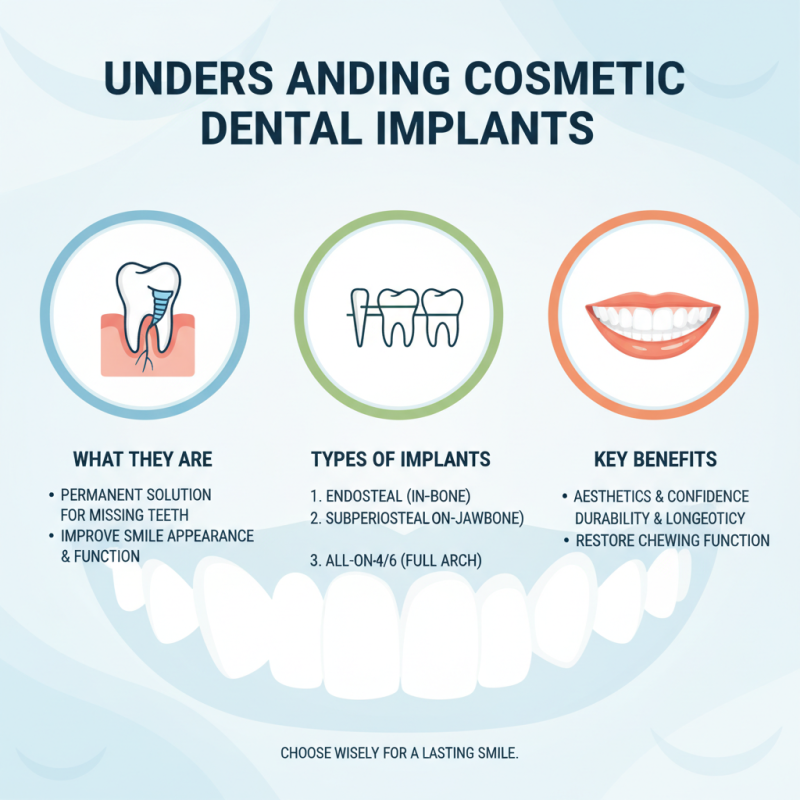
Cosmetic dental implants are a popular option for those seeking to improve the appearance of their smiles. These implants offer a permanent solution for missing teeth while restoring function. Understanding the various types of dental implants is crucial in making an informed decision. Each type has its own materials, techniques, and benefits. Your choice will impact both the aesthetics and durability of your smile.
When considering cosmetic dental implants, it’s essential to consult with a qualified dentist. They can evaluate your dental health and guide you through the process. A thorough assessment will identify any underlying issues, such as bone density or gum health, that may affect the outcome. Remember, not all implants are the same, and your unique needs must be considered.
Despite advances in technology, dental implants don’t always guarantee perfection. Some patients experience discomfort or complications after the procedure. It’s vital to discuss these possibilities with your dentist. Being aware of the potential for imperfect outcomes can help manage expectations. Ultimately, a well-informed decision will lead to the best results for your smile.

Choosing cosmetic dental implants requires careful consideration. Factors such as materials, experience of the dentist, and technology significantly influence the results. According to the American Academy of Implant Dentistry, about 3 million people in the U.S. have dental implants. Each year, that number grows by 500,000. This showcases a strong demand for reliable implant solutions.
Material quality is crucial. Implants made from titanium tend to offer better integration with bone. However, zirconia implants are gaining popularity due to their aesthetic appeal and lower chance of gum irritation. A study published in the Journal of Oral Rehabilitation found that 92% of patients reported satisfaction with their titanium implants, while 85% felt the same about zirconia. Yet, some patients experience complications like peri-implantitis, which can jeopardize long-term success.
The dentist's expertise matters greatly. An experienced implantologist may have a lower complication rate. Looking for certifications and patient reviews can help gauge this aspect. Technology also plays a role; 3D imaging can enhance precision. However, even with advanced technology, patient candidacy may still vary. Factors like bone density, age, and overall health influence the outcome. Thus, thorough consultations are vital for informed decisions.
Cosmetic dental implants come in various types, tailored to meet diverse needs. These implants often vary in materials, shapes, and purposes. Titanium implants are a popular choice due to their strength and biocompatibility. They fuse well with jawbone, providing a stable foundation. However, some patients may experience discomfort during healing.
Zirconia implants offer an aesthetic advantage. They blend better with natural teeth and reduce visibility of metal. Yet, they may not be suitable for everyone, especially those who need additional support. It’s essential to consult with a dental professional to understand the pros and cons of each type.
Mini implants serve as an alternative for those with limited jawbone density. They require less invasive procedures and shorter recovery times. However, their smaller size may limit the force they can withstand. Each option has its unique benefits and potential drawbacks. It’s crucial to reflect on individual needs and concerns before choosing the right type of cosmetic dental implant.
When considering cosmetic dental implants, assessing your oral health is crucial. Your eligibility may depend on various factors like bone density, gum health, and overall dental hygiene. According to the American Academy of Implant Dentistry, about 70% of adults aged 35 to 44 have lost at least one tooth, highlighting a common need for implants. However, not everyone qualifies immediately.
You should have a comprehensive dental exam before proceeding. Techniques like X-rays and CT scans help evaluate your bone structure and layout. If there is insufficient bone density, a bone graft might be necessary. This means undergoing an extra procedure before you can receive your implants.
Tips: Maintain good oral hygiene prior to your appointment. Brush and floss daily, as this can boost gum health. If you smoke, consider quitting; this can enhance healing. Be open with your dentist about any health issues, as they can affect your treatment plan. Remember, optimal oral health can significantly improve the success rate of implants, which stands at about 95% when performed on suitable candidates. Reflecting on these factors can lead to better long-term outcomes.
Choosing a qualified cosmetic dentist is crucial for achieving the best results with dental implants. Look for a professional who has extensive experience in cosmetic dentistry. Check their credentials and training. A good dentist will often have specialized training in this field, which can make a significant difference in your care.
Visit the dentist's office to assess their environment. It should be clean and welcoming. A friendly staff can indicate a positive atmosphere. Ask about the technology they use. Advanced equipment is usually a sign that the dentist stays updated with the latest techniques. Don't hesitate to ask for before-and-after photos of previous work. This visual evidence can help you gauge their skills.
Patient reviews can be insightful but consider their context. Some reviews may come from situations that don't reflect your needs. If possible, seek recommendations from friends or family. Word-of-mouth referrals often point to trustworthy professionals. Take your time during this process. Rushing into a decision can lead to regrets later. Be prepared to ask questions and express any concerns you may have during initial consultations.