China has become a major sourcing destination for orthodontic products, including Clear Aligners. Global buyers now expect more than attractive factory prices. They need predictable treatment quality, responsive communication, and dependable export support.
This guide introduces ten Chinese manufacturers serving international buyers. It focuses on practical evidence rather than promotional claims. Each company should be assessed through product experience, manufacturing expertise, quality systems, and market credibility. Important details include aligner material consistency, digital design compatibility, production lead times, case review procedures, and packaging protection. Buyers should also examine certifications, traceability records, clinical partnerships, and after-sales communication. Small details matter. A damaged pouch or unclear revision policy can disrupt an entire treatment plan.
The selection approach recognizes that “top” does not mean identical. Some manufacturers may excel in high-volume production, while others offer stronger customization or orthodontic planning support. Their strengths can differ by market, order size, and clinical workflow. Website claims alone are not enough. Factory audits, sample evaluation, and verified customer references provide stronger confidence. Even this comparison has limits. Public information can change, and some supplier capabilities remain difficult to verify remotely.
For this reason, the following overview is designed as a practical starting point, not a final purchasing decision. It helps distributors, clinics, and private-label brands ask better questions before placing an order. Reliable partnerships are built through evidence, careful communication, and repeated performance—not impressive promises.
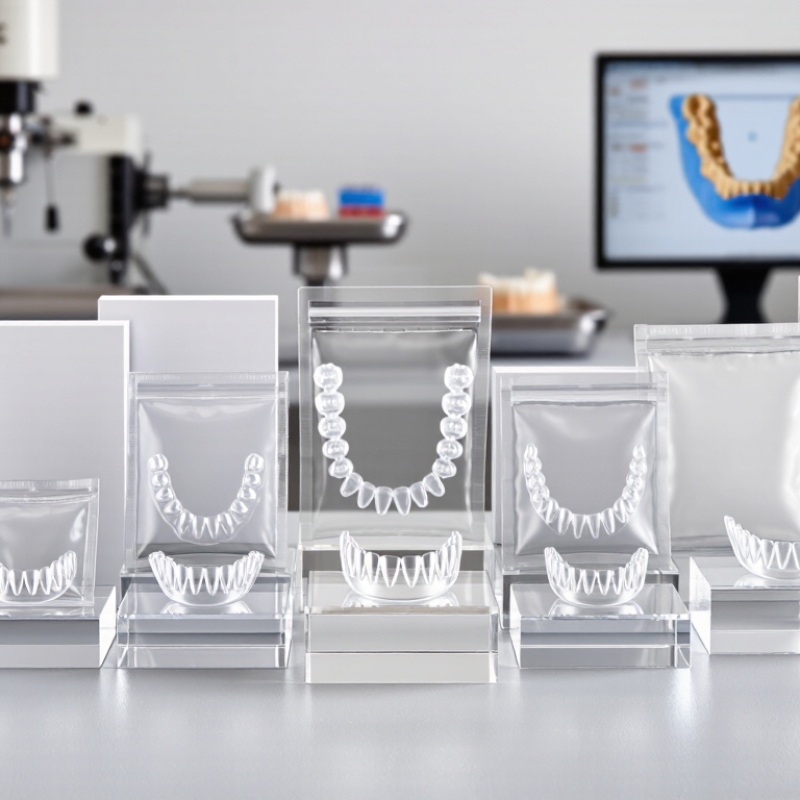
China’s clear aligner industry has moved from contract production toward integrated digital orthodontic manufacturing. Grand View Research estimated the global clear aligner market at more than US$4 billion in 2023. It also forecasts strong double-digit growth through 2030. China benefits from dense dental laboratories, mature polymer supply chains, and large-scale CAD/CAM production. A typical workflow now links intraoral scans, remote treatment planning, automated model printing, and thermoforming. Production speed is a real advantage.
However, manufacturing scale does not automatically prove clinical reliability. China’s global market position depends on more than competitive pricing. Export buyers should review material certificates, batch traceability, fit-testing records, and complaint-handling procedures. The International Organization for Standardization highlights risk management and quality systems as essential for medical devices. These requirements matter when aligners cross borders. Small documentation gaps can delay market access.
Demand is also becoming more professional. A 2024 MarketsandMarkets analysis identifies digital dentistry and rising orthodontic awareness as major growth drivers. Chinese manufacturers are responding with cloud-based case platforms and shorter production cycles. Some facilities can process thousands of appliances daily, but capacity figures can be difficult to compare. That is an uncomfortable point. Buyers should verify actual output, not only factory claims. Clinical partnerships, orthodontist training, and post-delivery support remain uneven across suppliers. China is increasingly important to global clear aligner procurement, yet its strongest advantage may be manufacturing coordination rather than complete clinical ownership.
Selecting the top 10 Chinese clear aligner manufacturers requires more than comparing website claims. The review begins with factory experience, production capacity, and documented quality procedures. Auditors examine material storage, thermoforming equipment, trimming stations, and packaging areas. Small details matter, such as clean worktables and traceable batch records.
Product performance receives careful attention. Samples are checked for fit, edge smoothness, transparency, and consistency across repeated orders. Digital treatment planning is reviewed by qualified dental professionals, not only sales teams. The assessment also considers scanning compatibility, case revision procedures, and communication speed. A reliable manufacturer should provide clear technical files, test reports, and export documents for the buyer’s target market. Vague answers create risk.
Real buyer experience adds another layer. Reviewers compare delivery records, response times, after-sales support, and complaint handling. One delayed case may reveal more than a polished presentation. Pricing is considered, but unusually low quotations require closer inspection of materials, labor, and inspection steps. No ranking is perfect. Factory conditions can change, and public information may remain incomplete. That limitation should be stated openly. A careful selection therefore combines site evidence, professional judgment, sample testing, and ongoing communication rather than relying on popularity alone.
China’s clear aligner sector includes manufacturers with different strengths, capacities, and quality systems. A useful buyer profile should examine production evidence, not marketing language. Factory audits can reveal cleanroom conditions, operator training, and traceability practices. Buyers should also review material certificates, treatment-planning workflows, and documented quality controls. Photos alone are weak evidence.
One manufacturer may focus on digital scanning integration and rapid case processing. Another may rely on orthodontist-led treatment planning. A third may specialize in automated thermoforming for consistent fit. A fourth may offer advanced polymer options and detailed material records.
A fifth may support export documentation and multilingual service teams. Another may provide OEM production for established dental distributors. A smaller manufacturer may accept low-volume orders but face capacity limits.
One company may invest heavily in software and remote case monitoring. Another may use in-house 3D printing to shorten model production. The tenth may stand out through independent testing and stronger compliance documentation.
These profiles should include production volume, remake rates, lead times, and communication practices. Ask how adjustments are handled after delivery. Ask who approves difficult cases. Some suppliers respond quickly, but their technical explanations remain thin. Others provide excellent records but move slowly. Neither weakness should be ignored. A serious evaluation also checks packaging, storage guidance, and post-sale support. Cost matters, yet the cheapest quotation can hide weaker controls or limited clinical assistance. No profile is flawless; careful buyers should verify every important claim before signing a supply agreement.
For global buyers, comparing Chinese clear aligner manufacturers requires more than checking prices. Product evaluation should begin with material consistency, documented thickness, trimming quality, and case suitability. Ask for samples from different production batches. Fit matters. Examine edge smoothness under bright light, packaging seals, labeling, and patient-specific identification. Some suppliers focus on mild cases, while others support complex staging with attachments, elastics, or refinements. A broad catalog does not prove clinical capability. Request anonymized case records, treatment parameters, and remake statistics. These details reveal practical experience better than polished presentations.
Technology comparison should cover the complete digital chain. Can the manufacturer accept common scan files, review treatment plans, and revise staging quickly? Look for controlled CAD design, validated 3D printing, post-processing checks, and batch traceability. Automated inspection can reduce variation, but human review still catches poor margins and unrealistic movements. It is easy to overvalue software screenshots. Ask how errors are recorded and corrected. A reliable partner should explain production tolerances, material testing, cleaning instructions, and storage conditions in clear English. Some answers may remain incomplete. That is a reason to investigate, not an automatic rejection.
Certifications deserve careful verification. Check the scope, issuing body, expiry date, and covered production site for ISO 13485, applicable CE documentation, and biocompatibility reports. Certificates alone cannot confirm daily quality. Request audit summaries, complaint-handling procedures, and lot-level records. Service also affects treatment continuity. Compare planning support, sample approval, delivery windows, training, communication hours, and remake policies. Confirm who handles urgent changes and customs documents. Trial orders are useful. They expose delays, unclear instructions, and weak after-sales ownership before larger commitments. A balanced comparison accepts trade-offs: lower cost may mean less customization, while premium support may require higher volumes.
Choosing a Chinese clear aligner manufacturer requires more than comparing prices. A serious evaluation begins with documented quality systems, qualified technical staff, and traceable production records. Ask for current certifications, material specifications, and independent testing reports. Verify whether those documents match the factory’s actual products. A polished website proves little.
Request physical samples before signing a long-term agreement. Check trimming accuracy, edge comfort, transparency, and packaging quality. Review how digital treatment plans are created and approved. Experienced manufacturers should explain their software workflow in practical terms. They should also provide measurable production limits, correction policies, and realistic delivery schedules.
Factory communication matters greatly. Test response times with detailed technical questions. Can the team explain remakes, case revisions, and shipping damage clearly? Reliable suppliers maintain batch records and protect patient information through controlled access. Export experience is useful, but local legal requirements still need independent verification. Do not assume one certificate covers every market.
I have seen promising samples hide inconsistent finishing. Small gaps can become expensive problems. A video audit helps, but an on-site inspection offers stronger evidence. Evaluate monthly capacity, staff training, equipment maintenance, and emergency planning. Low prices may reflect efficient production, or overlooked controls. Ask again. Then compare evidence, not promises.