Leave Your Message
Bridges Crowns are more than small ceramic or metal components; they restore chewing function, protect prepared teeth, and must fit comfortably in a patient’s mouth. China’s manufacturers serve a market shaped by digital scanning, CAD/CAM production, and demand for consistent quality. For buyers, a polished product image is not enough. Material specifications, marginal fit, shade matching, production controls, and traceability deserve close attention.
The World Health Organization’s Global Oral Health Status Report (2022) estimates that oral diseases affect nearly 3.5 billion people worldwide. It also reports that untreated decay in permanent teeth affects about 2 billion people. These figures describe broad oral-health needs, not crown-and-bridge sales. That distinction matters. WHO Director-General Dr. Tedros Adhanom Ghebreyesus stated: “Oral health has long been neglected in global health, but many oral diseases are preventable and treatable with cost-effective measures.” The report gives useful context, but it cannot tell buyers which factory will deliver reliable restorations.
This guide examines China’s dental crowns and bridges manufacturers through practical criteria: material options, digital workflow, quality documentation, customization, and communication. A sample crown under bright inspection light may look convincing, yet fit and durability require more than appearance. The evidence can be uneven. Buyers should verify claims, request technical records, and assess samples before making decisions. That extra scrutiny is not glamorous. It is useful.
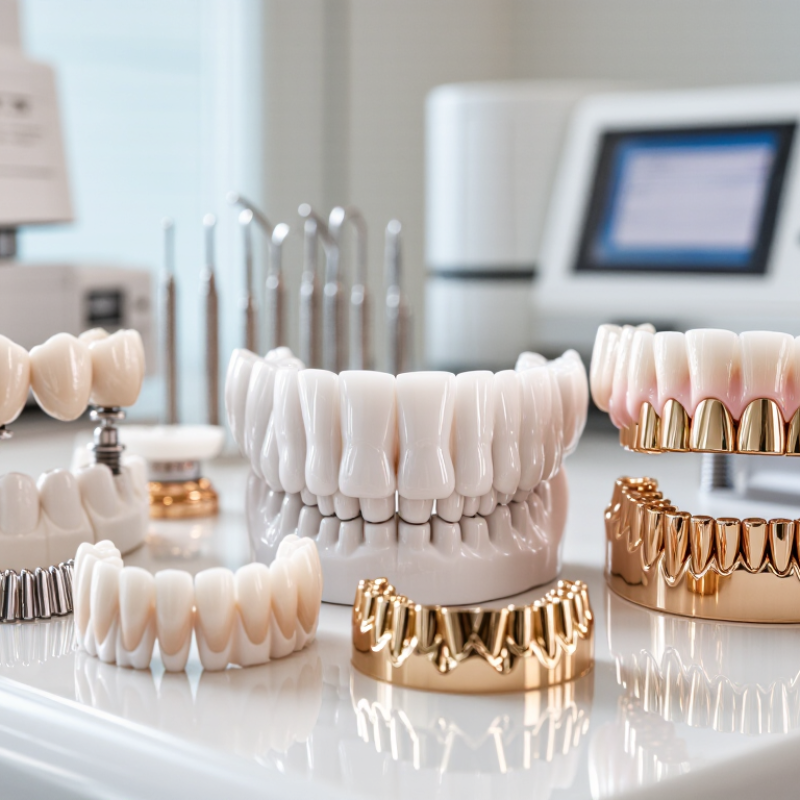
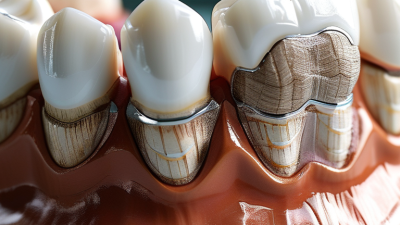
Dental crowns cover and protect a weakened tooth, restore its shape, and support chewing after extensive decay or root-canal treatment. Full-coverage crowns may use metal, porcelain-fused-to-metal, or ceramic materials. Material choice depends on tooth position, bite forces, appearance, and remaining tooth structure. A molar تحملs heavy pressure; a front tooth needs a natural-looking shade. The preparation matters, too.
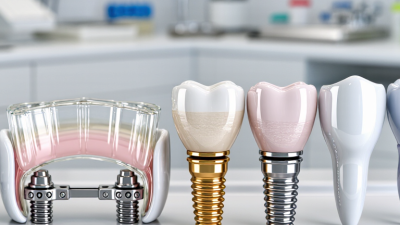
Bridges replace one or more missing teeth by joining an artificial tooth to supporting teeth or implants. Conventional bridges can suit gaps beside strong teeth, while resin-bonded designs may preserve more tooth structure in selected cases. Cantilever bridges rely on support from one side, so careful case selection is essential. A 2015 systematic review in the Journal of Dentistry reported five-year survival of 94.7% for metal-ceramic single crowns and 90.7% for all-ceramic crowns. These figures summarize study populations, not individual guarantees. Fit matters. Poor cleaning around bridge supports can invite decay or gum inflammation, and crowns cannot repair every bite problem. A careful examination and maintenance plan remain important.
| Restoration Type | Common Material | Typical Clinical Uses | Key Considerations | Common Limitations |
|---|---|---|---|---|
| Monolithic zirconia crown | Yttria-stabilized zirconia ceramic | Full-coverage crowns on posterior teeth; selected anterior crowns; crowns on implants when specified by the restorative plan. | High strength and no veneering layer to chip. Shade, translucency, thickness, and cementation should be selected for the clinical situation. | May be less translucent than glass ceramics. A rough or inadequately polished surface can contribute to wear of opposing teeth. |
| Layered zirconia crown | Zirconia framework with veneering ceramic | Crowns where a more natural layered appearance is desired, particularly in visible areas. | Combines a strong framework with a veneered outer surface. Occlusion and veneer support require careful design. | Veneering ceramic can chip or fracture; it is generally less suitable for patients with heavy parafunctional loading without careful assessment. |
| Lithium disilicate crown | Glass-ceramic containing lithium disilicate | Single crowns for anterior and selected premolar or molar teeth when the preparation and bite are appropriate. | Offers good translucency and can be bonded or conventionally cemented according to the preparation and product instructions. | Not usually the first choice for long-span bridges. Minimum material thickness, preparation design, and occlusal forces matter. |
| Porcelain-fused-to-metal (PFM) crown | Metal alloy coping with a porcelain veneer | Single crowns and fixed dental prostheses, including some multi-unit bridges. | Long-established option; metal substructure can provide support beneath the porcelain. Alloy composition should be disclosed and considered in the treatment plan. | Porcelain may chip; a metal margin can become visible if gum levels change. Appearance may be less lifelike than some all-ceramic options. |
| Full-metal crown | Dental casting alloy, such as a noble-metal or base-metal alloy | Posterior teeth with limited restorative space or high functional demands, when appearance is not the main priority. | Can be made with a relatively conservative preparation compared with some ceramic restorations. Material selection depends on the case and patient considerations. | Metallic appearance makes it unsuitable where a tooth-colored result is required. Some patients may have sensitivities to specific alloy constituents. |
| Temporary crown or bridge | Commonly provisional resin or acrylic material | Short-term protection and function while a definitive crown or bridge is being fabricated or treatment is in progress. | Provides interim coverage and helps maintain tooth position and appearance. It should be reviewed and replaced by the planned definitive restoration. | Not designed for long-term service; may wear, fracture, loosen, or stain more readily than definitive restorations. |
| Conventional fixed dental bridge | Often PFM or zirconia; material depends on span and clinical design | Replacement of one or more missing teeth using crowns on prepared abutment teeth, when those teeth and the supporting tissues are suitable. | Requires assessment of abutment teeth, bite, span length, and oral hygiene. The bridge is fixed in place and cannot be removed by the patient. | Preparation of supporting teeth is required. Cleaning beneath the replacement tooth needs instruction and appropriate aids; suitability varies by case. |
| Cantilever bridge | Commonly ceramic or PFM, selected for the clinical design | Replacement of a missing tooth supported by an abutment or abutments on one side only, in carefully selected cases. | Selection depends on tooth position, bite forces, support, and the number and condition of abutments. | Creates leverage on its supporting teeth; it is not appropriate for every tooth position or loading situation. |
| Resin-bonded bridge | Typically a tooth-colored pontic with a metal or ceramic retainer bonded to adjacent tooth surfaces | Selected cases, often for replacement of a single anterior tooth when suitable enamel and occlusion are present. | Often involves less removal of tooth structure than a conventional bridge. Careful case selection and bonding technique are important. | Retainer debonding can occur. It may be unsuitable where there is inadequate enamel, unfavorable bite, or excessive loading. |
Clinical note: The appropriate restoration depends on examination, radiographs where indicated, remaining tooth structure, periodontal health, occlusion, material instructions, and the patient’s needs. A qualified dental professional should make the final treatment and material selection.