Leave Your Message
The global demand for durable, natural-looking dental restorations continues to expand. The World Health Organization’s Global Oral Health Status Report (2022) estimates that nearly 3.5 billion people live with oral diseases. Tooth loss remains a major restorative challenge. For clinics, laboratories, and distributors, choosing the right Zirconia Bridge requires more than comparing prices. Framework design, translucency, connector strength, cementation, and milling accuracy all influence clinical performance.
This guide examines the Top 10 Zirconia Bridge Types for Global Buyers. It connects practical laboratory experience with recognized technical guidance. ISO 6872 classifies ceramic materials according to strength and intended use, offering a useful reference for bridge selection. Meanwhile, market analyses from Grand View Research and Fortune Business Insights identify dental zirconia as a growing segment within advanced restorative materials. Their forecasts differ because product definitions and regional coverage vary. That difference deserves attention.
A posterior bridge may need high flexural strength, while an anterior restoration may prioritize light transmission. A four-unit design can also behave differently from a three-unit design. Small connector dimensions matter. So does the patient’s bite.
Not every “multilayer” block performs identically.
Buyers should review manufacturer data, clinical indications, shade systems, sintering schedules, and quality certifications before ordering. They should also confirm whether a product has independent testing or only promotional claims. This introduction sets a practical foundation for comparing ten common bridge types across international markets. Some choices will look obvious. Others may require careful reconsideration.
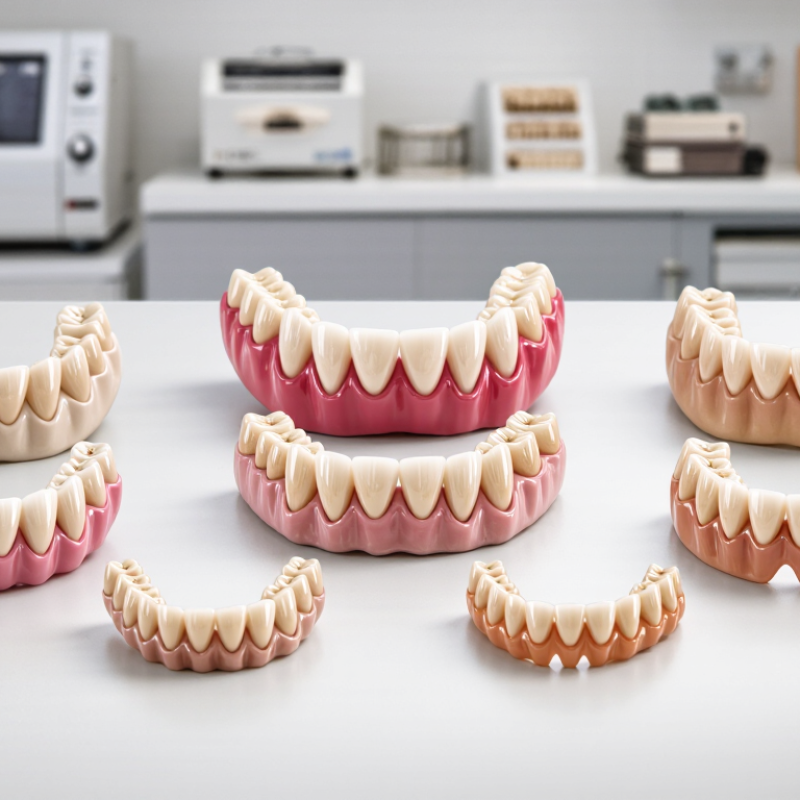
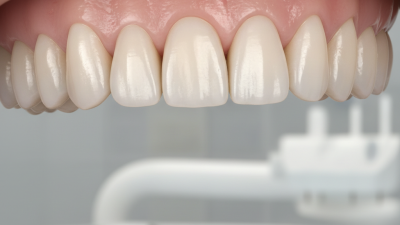
A zirconia bridge is a fixed dental prosthesis that replaces one or more missing teeth. It usually contains two crowns and one or more artificial teeth, called pontics. The framework uses zirconium dioxide, a strong ceramic processed through CAD/CAM milling and sintering. It is not a miracle.
The World Health Organization’s Global Oral Health Status Report 2022 estimates that nearly 2 billion people have untreated caries in permanent teeth. Missing teeth can affect chewing, speech, and bite stability. Zirconia bridges are used because they offer high strength, good tissue compatibility, and a metal-free appearance. Their white core can also support natural-looking shades, although translucency varies between materials and thicknesses.
Clinical evidence still requires careful reading. A systematic review in Clinical Oral Investigations reported approximately 91% five-year survival for tooth-supported zirconia fixed dental prostheses. However, chipping, debonding, inaccurate fit, and shade mismatch remain possible. Fit matters. Posterior bridges need sufficient connector dimensions and controlled occlusion. Thin designs may look attractive but reduce safety margins. Some zirconia surfaces may also increase wear on opposing teeth when poorly polished. That assumption needs checking.
Global buyers should review ISO 6872 classification, flexural-strength data, sintering instructions, traceability, and clinical documentation. Laboratory skill matters as much as the ceramic itself. A lower price may hide longer adjustment time or inconsistent shade control. Dentists should assess periodontal health, abutment strength, bite forces, and cleaning access before selecting any bridge type.
A zirconia bridge is a fixed dental prosthesis made partly or entirely from zirconium dioxide ceramic. It is used to replace one or more missing teeth, restore chewing function, and provide a tooth-colored alternative to metal-based frameworks. Final selection should be determined by a qualified dentist or dental laboratory according to the clinical case.
| Rank | Zirconia Bridge Type | Typical Configuration | Common Clinical Use | Usual Material Design | Key Advantages | Important Buying and Design Considerations |
|---|---|---|---|---|---|---|
| 1 | Monolithic Zirconia 3-Unit Bridge | Two abutment crowns supporting one pontic | Replacement of a single missing tooth, especially in posterior areas | Full-contour zirconia | High fracture resistance, no porcelain veneering layer to chip, and efficient digital production | Requires accurate occlusal adjustment and sufficient interocclusal space; shade characterization may be less lifelike than layered designs |
| 2 | Layered Zirconia Bridge | Zirconia framework covered with veneering porcelain | Anterior and premolar restorations where detailed esthetics are important | Zirconia framework + porcelain | Natural-looking translucency, customized morphology, and good soft-tissue appearance | Veneering porcelain can chip under unfavorable loading; framework support, firing schedule, and laboratory quality are important |
| 3 | 3-Unit Anterior Zirconia Bridge | Two anterior abutments and one pontic | Replacement of a missing incisor or canine when adjacent teeth can support the restoration | Translucent monolithic or layered zirconia | Metal-free appearance, good color stability, and a highly customizable emergence profile | Connector shape, pontic contour, margin position, and shade matching are critical for esthetic success |
| 4 | Posterior Multi-Unit Zirconia Bridge | Four or more units replacing several adjacent posterior teeth | Longer spans in the premolar or molar region | Monolithic high-strength zirconia | Suitable for high occlusal-load regions and provides a metal-free fixed option | Long-span flexure, connector dimensions, occlusal scheme, and abutment condition must be carefully evaluated |
| 5 | Cantilever Zirconia Bridge | One or more pontics supported from one side only | Selected cases with limited space or when an additional abutment is not available | Usually monolithic zirconia | Can replace a tooth with fewer prepared abutments | Creates leverage and higher stress on the supporting tooth; generally requires conservative loading and strict case selection |
| 6 | Maryland-Style Zirconia Bridge | Pontic retained by zirconia wings bonded to the lingual surfaces of adjacent teeth | Conservative replacement of selected anterior teeth, often as an interim or minimally invasive option | Zirconia framework with bonded retainers | Limited tooth preparation and preservation of natural tooth structure | Bonding protocol, enamel availability, wing design, moisture control, and occlusal contacts strongly affect retention |
| 7 | Implant-Supported Zirconia Bridge | Bridge attached to two or more dental implants rather than natural teeth | Replacement of multiple missing teeth when implant therapy is appropriate | Zirconia restoration on implant-supported framework | Does not require preparation of neighboring natural teeth and offers a tooth-colored alternative to metal frameworks | Implant angulation, passive fit, screw-channel position, framework design, hygiene access, and restorative space are essential |
| 8 | Full-Arch Zirconia Bridge | One fixed restoration replacing most or all teeth in one arch | Complete-arch rehabilitation supported by natural teeth or, more commonly, implants | Monolithic or layered full-arch zirconia | High rigidity, stain resistance, and a fixed alternative to removable full dentures | Requires comprehensive planning of vertical dimension, occlusion, hygiene design, passive fit, phonetics, and maintenance access |
| 9 | Zirconia Bridge with Pink Ceramic | Tooth-colored bridge combined with gingiva-colored ceramic | Cases with tissue loss, long edentulous spaces, or implant restorations requiring soft-tissue camouflage | Zirconia framework + gingiva-colored ceramic | Can improve visual proportions and mask moderate ridge defects without surgical correction | Gingival contours must permit cleaning; shade integration, ceramic support, and patient maintenance are important |
| 10 | Temporary or Provisional Zirconia Bridge | Short-term fixed bridge used during staged treatment or laboratory try-in | Protects prepared teeth, tests esthetics and occlusion, or serves during implant and restorative planning | Lower-strength or digitally milled zirconia design | Provides a fixed, tooth-colored provisional option with good dimensional stability | It is not automatically a substitute for a definitive restoration; expected service duration, cementation, removability, and final treatment timing should be specified |